The 15 minute city is a concept advocating that cities be designed to allow people to live, work, and play all within a 15 minute walk or bicycle ride. This urban design theory has gained popularity in recent years as a way to create more sustainable and livable cities.
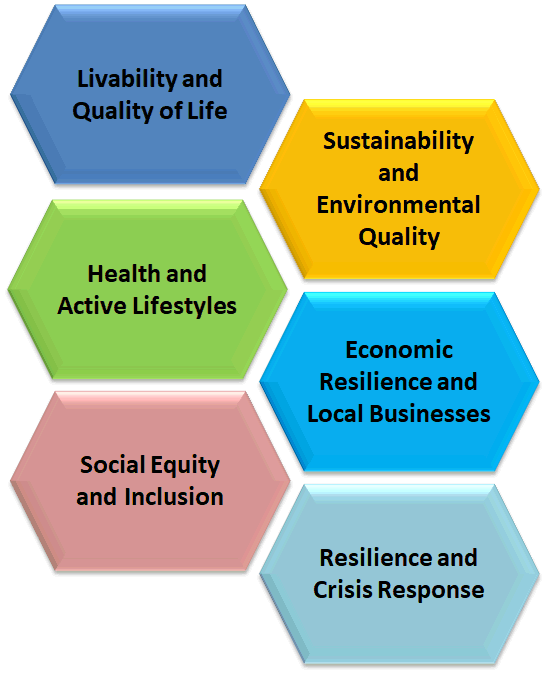
The 15-minute city concept is significant because it creates more livable, sustainable, and resilient communities by ensuring that residents can access most daily needs within a short walk or bicycle ride. This improves quality of life by reducing commuting time and stress, encourages healthier and more active lifestyles, and lowers carbon emissions and traffic congestion.
It also strengthens local businesses and neighborhood economies, promotes social equity by making essential services accessible to everyone, including vulnerable groups, and enhances community resilience by enabling neighborhoods to better respond to emergencies through strong local resources and support networks.
A 15-minute City is not automatically a compact city or a high-density neighbourhood. Careful planning and zoning regulations can create very liveable urban areas within the "15-minute" zone.
Private sector participation, particularly private train operators, is a critical component of the 15-minute city. Urban planning rules, including zoning laws, form the other important aspect.